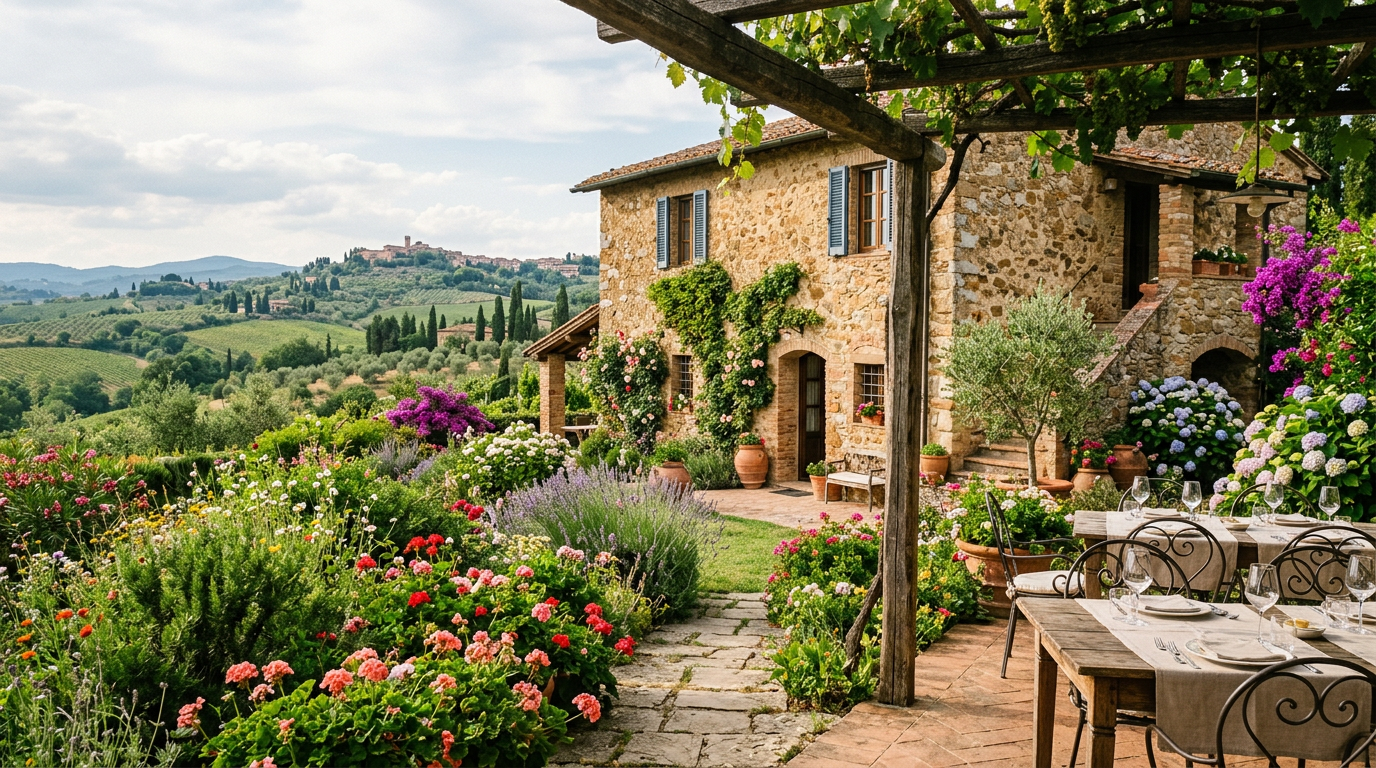
Agriturismo in Val d'Elsa: what to look for and where to find it
The Val d’Elsa is one of the most fertile zones in all of Tuscany for the agriturismo experience. Between Barberino Val d’Elsa, Tavarnelle, San Donato in Poggio, and Certaldo, the landscape is dense with working farms that have opened their doors to guests in ways that range from the informal and family-run to the polished and well-equipped. Understanding what you are looking for before you book makes a significant difference to what you actually experience.
The agriturismo model is one of Italy’s most successful rural hospitality inventions. A working farm supplements its agricultural income by welcoming guests. In principle, the farming activity must remain the primary one. In practice, quality varies enormously. Some agriturismi are deeply connected to the land and the seasons. Others use the label for a rural property that has little to do with active agriculture.
Agriturismi in Val d’Elsa
The Val d’Elsa corridor between the Chianti hills to the east and the Certaldo ridge to the west concentrates a remarkable density of genuinely working farms. Wine production and olive oil are the two dominant activities, and many estates combine both. Some farms also keep livestock, cultivate kitchen gardens, or produce honey, vegetables, or pecorino.
The legal framework governing agriturismi in Italy requires that the agricultural activity be genuine and primary. Regional authorities in Tuscany enforce this with some rigour, which means that farms operating under the agriturismo label in this area are, in most cases, real farms. The certification is not merely decorative.
What this means for the guest is that staying at an agriturismo in the Val d’Elsa typically connects you to a real food-producing landscape. The wine on the table at dinner may have been made from grapes grown in the vineyard visible from the dining room window. The olive oil poured at breakfast may have been pressed in November from the same trees you can see from your room. The vegetables in the evening meal may have come from a kitchen garden fifteen metres from the kitchen.
This proximity to production is the central value of the agriturismo experience. It is not replicable in a city hotel or even in a rural hotel that sources its food from suppliers.
What makes a good agriturismo
The most reliable sign of a genuine agriturismo is an active relationship between the farm’s production and the guest experience. Ask, before booking, what the farm produces. Can they serve their own products? Can guests visit the cellar, the olive press, or the vegetable garden? The answers tell you quickly whether the agricultural claim is substantive.
The dining experience is the most important indicator. A kitchen rooted in its own land cooks differently from one that sources from a catering supplier. It cooks what is available, not what is on a fixed menu. In October, if the farm has porcini mushrooms, there will be porcini. If the ribollita is made with the farm’s own beans and dressed with the year’s new olive oil, you will know it.
Scale matters. A smaller operation with four to eight rooms maintained by the farming family offers a more personal experience than a larger property with twenty rooms and a swimming pool staffed by employees. Both can be excellent, but they are different experiences. Smaller farms tend toward spontaneity and genuine hospitality; larger ones toward comfort and organised activities.
The physical setting is secondary to the human one. A beautiful stone farmhouse run by people who are not interested in their guests is less satisfying than a modest house run by a family that genuinely enjoys having visitors.
Activities on agriturismi
The activities available at a Val d’Elsa agriturismo depend heavily on the season and what the farm grows or produces.
Spring, from March to May, is the season of pruning, vegetable garden preparation, and the awakening of the vineyard. A farm that invites guests to walk the rows and understand what is happening in the vines in March is offering something that cannot be replicated in summer.
Summer brings the full activity of the vegetable garden, guided walks through the vineyards as the grapes develop, cooking classes using fresh garden produce, and on some farms, the beginning of preparations for the autumn harvests. Swimming pools, where they exist, become important in July and August.
Autumn is the season with the richest agricultural activity. Grape harvest participation is available at wine-producing farms from mid-September to October. The experience of picking grapes in the early morning, sorting them at the press, and watching the fermentation begin is one of the most direct and memorable connections to Tuscan food culture. Olive harvest follows in October and November and is slower, more meditative work than the grape harvest. Mushroom hunts and truffle outings can sometimes be arranged through farm contacts in autumn.
Winter is the quietest season, but not without its own value. Pruning continues. Wine ageing in barrels requires attention. Some farms organise fireside dinners in December and January that have an intimacy impossible to achieve in summer. Guests who visit in winter often describe the experience as the most genuine of any season.
Cooking classes deserve specific mention. Most agriturismi in this area offer them on request, focusing on pasta-making, bread-baking, ribollita, or seasonal sweets. These are informal and hands-on. You cook in the farm kitchen with the host or cook, eat what you make, and leave with a recipe and a skill.
Local products you find there
Breakfast at a genuine Val d’Elsa agriturismo is different from breakfast at a hotel. The eggs come from hens on the property. The jam is made from the plums or figs growing in the garden. The honey is from the farm’s own hives or from a beekeeper in the same valley. The bread is baked that morning or bought at the local panificio at six in the morning. None of these things have a uniform flavour. They taste like specific places and specific hands.
Dinner is the peak of the farm food experience. A ribollita made in October with the farm’s own cannellini beans, good pork bones, and Tuscan black cabbage, then topped with the first pressing of the new olive oil, is a dish that cannot be reproduced elsewhere. The ingredients are not rare or expensive. They are simply right for the season and the place.
Many farms sell their products directly to guests who want to take them home. Wine, olive oil, honey, and jams are the most common. These are not objects manufactured for tourists. They are surplus from production that would otherwise be sold locally. Buying them directly from the farm, knowing who made them and how, gives them a value that no shop-bought equivalent can match.
How to choose the right place to stay
Start with the agricultural profile. What does the farm produce? If you visit a farm’s website and cannot identify what it actually grows, makes, or raises, look elsewhere.
Read reviews for specific mentions of food quality and personal connection with the host. A review that says the swimming pool was clean tells you almost nothing about the farm’s character. A review that describes a conversation at dinner with the owner about the vintage, or a morning spent in the vineyard before breakfast, tells you something real.
Contact the farm directly before booking. Ask what is happening in the season of your planned visit. Ask what they will be serving at meals. A farm that responds with specific, enthusiastic detail is one that genuinely engages with its guests.
Consider what you actually want from the experience. If you want total immersion in farm life, look for smaller properties with full-board options. If you want comfortable accommodation with the option of farm meals but the freedom to eat elsewhere too, look for farms with half-board or no-board options. If you want the landscape and the atmosphere without any particular commitment to agricultural participation, a well-positioned agriturismo with a good breakfast and a comfortable room is sufficient.
Where to stay
Sogno d’Oro in Barberino Val d’Elsa offers the proximity and personal character of a genuine rural stay. You are in the heart of the Val d’Elsa agricultural landscape, with vineyards, olive groves, and working farms visible in every direction.
The guesthouse provides a calm and personal base from which to explore the wider agriturismo culture of the area, whether you choose to stay here or use it as a reference point for understanding what authentic rural Tuscany looks like.